
What Is a Visitor Management System?
In the rapidly evolving landscape of corporate operations and facility security, the Visitor Management System has turned to an absolute necessity. A Visitor Management System is far more than a simple digital replacement for the traditional paper logbook; it represents a sophisticated, integrated software and hardware solution designed to track, monitor, and manage the influx of guests entering any facility.
When defining a Visitor Management System, we refer to a comprehensive framework that automates the entire visitor lifecycle—from the initial scheduling of a meeting to the final checkout process. Historically, receptionists depended on handwritten logs, which were susceptible to errors, illegible entries, and serious privacy vulnerabilities. However, a modern Visitor Management System eliminates these issues entirely by providing a secure, efficient alternative.
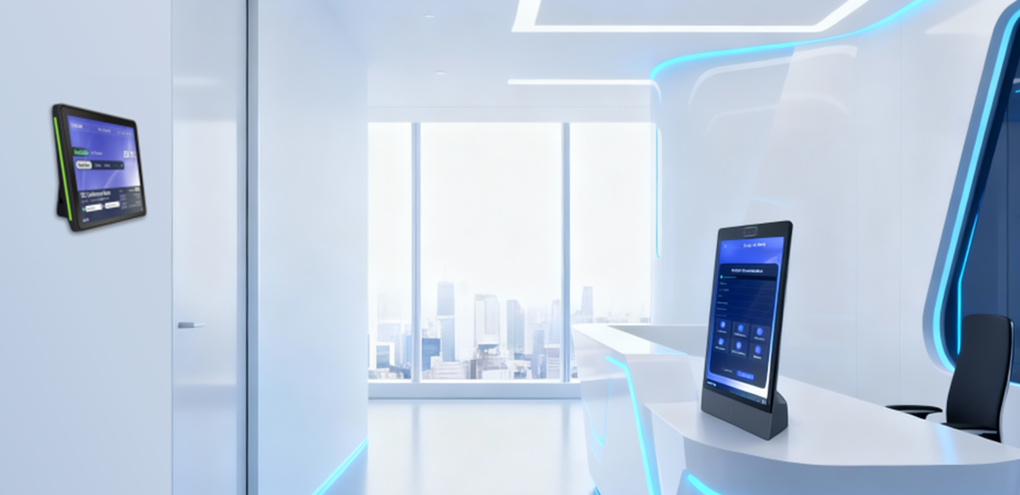
A typical Visitor Management System includes key components such as a self-service kiosk (often an iPad or tablet), By implementing a Visitor Management System, organizations can print customized ID badges, screen individuals against watchlists, and obtain digital signatures on essential legal documents like Non-Disclosure Agreements (NDAs).
At its core, a Visitor Management System ensures that every person within the building is accounted for, authorized, and fully compliant with company policies. Moreover, a Visitor Management System acts as the first line of defense in physical security, serving as a digital gatekeeper that verifies credentials before granting access.
Whether deployed in a corporate office, manufacturing plant, or educational institution, a Visitor Management System delivers valuable analytical data to uncover building usage trends and optimize operations. Ultimately, a Visitor Management System bridges the gap between a welcoming guest experience and stringent security protocols, guaranteeing that efficiency never compromises safety.
The adoption of a Visitor Management System underscores a company’s dedication to digital transformation, shifting from outdated manual processes to a streamlined, data-driven strategy for facility management.
Why Is Visitor Management system Important?
The importance of a Visitor Management System in today’s business environment cannot be overstated, as it touches upon every critical aspect of organizational management, from security to brand reputation. A Visitor Management System is essential because it replaces uncertainty with data-driven clarity, providing organizations with precise insights into visitor activities.
Without a Visitor Management System, a company is essentially blind to who is walking through its corridors, leaving assets and employees vulnerable to theft, corporate espionage, or physical harm. The implementation of a Visitor Management System is crucial because it creates a standardized process for every guest, ensuring that no one bypasses security protocols due to human error or social engineering.
Furthermore, a Visitor Management System is important for regulatory compliance; in an era of GDPR and strict data privacy laws, leaving a paper logbook open on a desk where guests can see previous visitors’ names is a violation that a Visitor Management System solves by keeping data encrypted and private. A Visitor Management System is also vital for emergency preparedness; in the event of a fire or evacuation, a Visitor Management System allows security teams to instantly generate a muster list of all non-employees on-site, a capability that manual methods simply cannot match.
Beyond security, a Visitor Management System is important because it drastically improves operational efficiency. Reception staff are often overwhelmed with calls and administrative tasks, and a Visitor Management System alleviates this burden by automating notifications and check-ins. The importance of a Visitor Management System also extends to the psychological comfort of employees, who feel safer and more valued working in an environment protected by a robust Visitor Management System.
As hybrid work models become the norm, the Visitor Management System becomes the central hub for managing not just external guests, but also contractors, delivery personnel, and even rotational employees, making the Visitor Management System the heartbeat of the modern, flexible office.
Why Is Visitor Management system Important?
1. Visitor Management System: Strengthens Workplace Security
Knowing exactly who is entering your office is essential, and a Visitor Management System is the most effective tool for achieving this level of visibility. A Visitor Management System strengthens workplace security by creating an immutable digital trail of every entry and exit. Unlike traditional paper logbooks, which can be falsified, altered, or lost, a Visitor Management System records visitor information in real time and securely stores it in the server for easy audits and compliance reviews.
A Visitor Management System can issue instant visitor badges that include photos, visitor types, and expiration times, enabling staff to quickly distinguish authorized individuals from potential threats. If someone is found in a sensitive area without a badge generated by the Visitor Management System, security teams can respond immediately. The Visitor Management System can also integrate with watchlists to automatically flag unwanted visitors before they gain access, preventing risks at the entry point.
By utilizing a Visitor Management System, organizations can enforce strict, zone-based access controls, ensuring visitors are restricted to approved areas only. The presence of a high-tech Visitor Management System at reception serves as a powerful deterrent, discouraging potential bad actors from attempting unauthorized entry. In addition, a Visitor Management System provides real-time monitoring through a live dashboard, allowing security teams to track the exact number of visitors on-site at any moment.
In cases involving intellectual property protection, a Visitor Management System ensures every guest digitally signs an NDA before proceeding, establishing a strong legal safeguard. Ultimately, a Visitor Management System is far more than a passive recording tool—it functions as an active security enforcement mechanism that transforms the reception area from a simple entry point into a fortified checkpoint.
2. Visitor Management System: Creates a Smooth Check-in Experience
No more long queues or tedious paperwork. A Visitor Management System revolutionizes the guest experience by eliminating friction from the arrival process. Visitors can pre-register through the Visitor Management System and receive a QR code via email, enabling them to scan and check in within seconds. This feature of the Visitor Management System ensures that VIPs and important clients are never left waiting while staff search for their host.
A Visitor Management System supports self-service kiosks that deliver a fast, intuitive, and professional check-in experience. Guests interact with a sleek Visitor Management System kiosk guided by a customized workflow that supports multiple languages and efficiently captures required information. The Visitor Management System guarantees that a visitor’s first impression of your organization is modern, efficient, and polished.
Furthermore, a Visitor Management System can send wayfinding maps and personalized instructions directly to the visitor’s phone, making navigation effortless. The impressive “wow” factor of a high-tech Visitor Management System sets a positive tone for the entire meeting. By leveraging a Visitor Management System, you eliminate issues such as illegible badges or forgotten appointments, while returning visitors can check in with a single tap for maximum convenience.
Ultimately, a Visitor Management System demonstrates respect for your visitors’ time and transforms what was once a bureaucratic task into a seamless and welcoming experience.
3. Visitor Management System: Saves Time for Your Staff
Reception teams no longer need to manually register visitors or make phone calls to notify hosts, as a Visitor Management System automates the entire communication process. A Visitor Management System saves significant time for staff by instantly sending notifications to the host via email, SMS, or integrations like Slack the moment a guest checks in. This prompt alert from the Visitor Management System frees employees from being tethered to their desks awaiting updates.
The Visitor Management System allows receptionists to shift focus toward higher-value responsibilities—such as concierge services, administrative support, or guest hospitality—rather than repetitive data entry and badge printing. By implementing a Visitor Management System, organizations dramatically reduce the constant interruptions that disrupt front-desk productivity. The Visitor Management System also streamlines checkout, with options for simple swipe-out or automatic expiration, eliminating the need for end-of-day log reconciliation.
For high-volume environments, the cumulative time savings delivered by a Visitor Management System across thousands of annual visits can be substantial. The Visitor Management System further simplifies courier and delivery handling, automating yet another routine time-consuming task. As a result, the return on investment for a Visitor Management System is quickly realized through regained staff hours and improved operational efficiency, making it a true productivity engine for the front office.
4. Visitor Management System: Enhances Health & Safety Compliance
Visitor data stored digitally within a Visitor Management System helps organizations meet regulatory requirements, trace activities, and manage on-site capacity when necessary. A Visitor Management System is essential for health and safety compliance, as it can screen visitors for symptoms or health declarations before granting entry. During public health concerns, a Visitor Management System supports fully contactless check-in processes to minimize germ transmission.
The Visitor Management System verifies that contractors and service providers carry valid insurance and safety certifications prior to commencing work. In emergency situations such as evacuations, a Visitor Management System instantly generates a comprehensive, cloud-accessible muster list of all on-site personnel—a critical advantage over manual methods. Additionally, a Visitor Management System ensures compliance with data privacy regulations like GDPR and CCPA by encrypting visitor information and automatically anonymizing or deleting records after a predefined period.
A Visitor Management System provides a verifiable digital audit trail for safety inspectors and regulatory reviews, demonstrating due diligence in facility access control. It can also deliver mandatory safety videos or emergency procedures for acknowledgment, effectively serving as a digital safety induction tool. In this way, a Visitor Management System becomes a vital component of comprehensive risk management, protecting both the organization from liability and employees from potential harm.
5. Visitor Management System: Builds a Modern, Professional Image
A sophisticated digital check-in process signals that your company prioritizes security, efficiency, and innovation—leaving a lasting first impression. A Visitor Management System builds a modern, professional image by replacing outdated paper logs with a sleek, touchscreen interface that reflects contemporary standards. When clients or partners encounter a state-of-the-art Visitor Management System upon arrival, they immediately perceive the organization as forward-thinking and well-organized.
The Visitor Management System can be fully branded with your company’s logo, colors, and visual elements, ensuring it feels like a natural extension of your corporate identity. By streamlining visitor flow, a Visitor Management System eliminates lobby congestion and creates a calm, controlled environment that enhances the overall atmosphere. The professionalism of receiving a pre-registration email from a Visitor Management System—complete with directions, QR codes, and personalized details—reinforces perceptions of operational excellence.
In competitive markets, the presence of a Visitor Management System subtly differentiates industry leaders from those still relying on legacy processes. It communicates a clear message: “We take our business—and your security—seriously.” A Visitor Management System also enables customized welcome messages, adding a warm, personal touch through advanced technology. As the digital face of your physical workspace, investing in a Visitor Management System is a strategic investment in your brand’s reputation and credibility.
Key Features to Look For in a Visitor Management System
When selecting a Visitor Management System, businesses must navigate a competitive market filled with various software solutions, making it essential to pinpoint the features that distinguish a high-quality Visitor Management System. A robust Visitor Management System should prioritize easy visitor check-in and check-out capabilities, with an intuitive interface that allows first-time users to navigate the Visitor Management System effortlessly without needing assistance.
Another vital feature of a modern Visitor Management System is QR code invitations, which enable touchless entry and significantly accelerate the check-in process. Automatic host notifications form the backbone of an effective Visitor Management System, ensuring instantaneous connections between guests and hosts through email, SMS, or integrated enterprise messaging apps.
Visitor badge printing is a non-negotiable element for any Visitor Management System focused on security, as it provides visual identification crucial for maintaining facility safety. A comprehensive Visitor Management System also includes a real-time visitor dashboard, offering administrators a bird’s-eye view of building occupancy at any given moment.
Customizable forms and workflows are key to a flexible Visitor Management System, allowing it to adapt to diverse visitor types—such as interview candidates requiring specific questions or maintenance contractors needing different protocols. Data privacy and compliance tools, including automatic data deletion and GDPR consent options, are indispensable for a Visitor Management System operating in today’s stringent regulatory landscape.
Finally, seamless integration with access control systems and other enterprise tools elevates a Visitor Management System from a basic application to a true enterprise-grade solution, enabling features like unlocking turnstiles or elevators for enhanced physical security. Overall, an ideal Visitor Management System should be user-friendly, reliable, and tailored to address real workplace challenges, ensuring it resolves issues rather than introducing new ones.
Primary Business Benefits of Implementing a Visitor Management System
Implementing a Visitor Management System delivers a multitude of returns on investment, ranging from tangible cost savings to intangible enhancements in brand equity. The primary business benefits of a Visitor Management System are deeply rooted in resource optimization and risk mitigation.
When a business deploys a Visitor Management System, it effectively upgrades its operational infrastructure to a more secure and efficient level. A Visitor Management System provides previously inaccessible data, empowering facilities managers to make informed decisions about staffing, space utilization, and overall workflow.
Moreover, a Visitor Management System reduces overhead costs associated with manual reception processes, streamlining daily operations. Furthermore, a Visitor Management System acts as a proactive insurance policy against potential security breaches, safeguarding against losses from intellectual property theft or liability claims.
A Visitor Management System also improves employee satisfaction by eliminating the hassle of manually retrieving and escorting guests. Below, we explore the specific areas where a Visitor Management System drives substantial business value.
Enhanced Physical Security and Risk Mitigation
The deployment of a Visitor Management System significantly enhances physical security by ensuring that every individual on the premises is fully accounted for, vetted, and tracked in real time. A Visitor Management System mitigates risk by eliminating guest anonymity; with a Visitor Management System, each badge is linked to a photo, name, and designated host for complete traceability.
The Visitor Management System enables the implementation of customizable watchlists, effectively preventing known threats from gaining entry. Furthermore, a Visitor Management System ensures that contractors acknowledge essential safety protocols prior to access, thereby reducing the likelihood of on-site accidents and associated liability.
The digital audit trail generated by a Visitor Management System proves invaluable during security investigations, offering verifiable records that support swift resolutions.
Improved Regulatory Compliance and Audit Readiness
A Visitor Management System serves as a cornerstone of modern compliance strategies across various industries. Whether addressing requirements under ITAR, GDPR, FSMA, or ISO certifications, a Visitor Management System provides the essential documentation to demonstrate robust control over facility access.
A Visitor Management System automates the collection of consent forms and NDAs, achieving 100% compliance rates that surpass the limitations of manual methods. When auditors arrive, the advanced reporting features of a Visitor Management System enable the generation of detailed access logs in mere seconds.
Additionally, a Visitor Management System ensures that visitor data is managed in accordance with legal retention schedules, automatically purging outdated information to maintain ongoing compliance and minimize risks.
Increased Front Desk Operational Efficiency
The operational efficiency gained from a Visitor Management System transforms the reception role into a more strategic function. A Visitor Management System handles repetitive tasks such as greeting and data capture, freeing staff to manage multiple responsibilities with greater ease.
The Visitor Management System dramatically reduces check-in times from minutes to seconds, enhancing throughput during peak periods. By automating host notifications, a Visitor Management System eliminates the inefficient “phone tag” between receptionists and employees, ensuring seamless coordination.
A Visitor Management System also streamlines deliveries and courier drop-offs, optimizing mailroom processes without additional effort. This level of efficiency allows businesses to scale visitor volumes without increasing headcount, highlighting the inherent scalability of a Visitor Management System.
Strengthened Professional and Brand Image
A Visitor Management System is often the first technological touchpoint a partner or client experiences with your brand, setting a tone of sophistication and reliability. A sleek, branded Visitor Management System kiosk communicates innovation, attention to detail, and a commitment to excellence.
The Visitor Management System delivers a consistent experience across multiple global locations, reinforcing a unified brand identity. By implementing a Visitor Management System, organizations signal that they value visitors’ time and safety, fostering positive perceptions from the outset.
The professional pre-registration emails generated by a Visitor Management System extend this branded experience even before guests arrive, building anticipation and trust. Ultimately, a Visitor Management System functions as a subtle marketing tool disguised within a robust security framework.
Reliable Data for Business Intelligence and Planning
A Visitor Management System represents a goldmine of data for business intelligence and strategic decision-making. By analyzing insights from a Visitor Management System, companies can identify peak visitation times, frequently accessed departments, and average meeting durations to optimize operations.
This data from a Visitor Management System informs precise planning for reception staffing levels and lobby design, ensuring resources are allocated effectively. A Visitor Management System can also track contractor hours for accurate billing reconciliation, reducing discrepancies and improving financial accuracy.
The actionable insights derived from a Visitor Management System enable smarter resource allocation and long-term facility planning. In essence, a Visitor Management System converts everyday visitor traffic into valuable, data-driven business metrics that drive growth and efficiency.
Integration Capabilities: The Visitor Management System as a Workplace Management Module
A modern Visitor Management System does not operate in isolation; its true potential is realized when it functions as an interconnected module within the broader workplace management ecosystem. The integration capabilities of a Visitor Management System enable it to communicate seamlessly with other enterprise software, facilitating a smooth and efficient flow of data across platforms.
For instance, a Visitor Management System can integrate with calendar applications such as Outlook or Google Calendar to automatically pre-register guests upon sending a meeting invitation. A Visitor Management System can also connect with Wi-Fi provisioning systems, generating temporary guest Wi-Fi passwords instantly during check-in. This enhanced connectivity positions the Visitor Management System as a central hub in the smart office environment.
By integrating a Visitor Management System with CRM platforms like Salesforce, sales teams can effortlessly track lead arrivals on-site, enhancing customer relationship management. Additionally, a Visitor Management System can link to collaboration tools such as Slack or Microsoft Teams, delivering real-time visitor arrival notifications directly to the platforms employees rely on daily.
The future of the Visitor Management System hinges on this interoperability, where the Visitor Management System initiates a series of automated actions that prepare both the building and staff for a guest’s arrival, streamlining operations and boosting overall efficiency.
Synergy with Access Control and Building Management Systems
The most critical integration for a Visitor Management System is with physical Access Control Systems (ACS). This synergy empowers the Visitor Management System to provision temporary access credentials for specific doors, turnstiles, or elevators based on the visitor’s profile and permissions.
When a Visitor Management System communicates with the ACS, guests can use a QR code generated by the Visitor Management System to access parking gates or navigate lobby speed gates seamlessly. This integration ensures that the Visitor Management System enforces security measures not only digitally but also physically, providing comprehensive protection.
Furthermore, integrating a Visitor Management System with Building Management Systems (BMS) can optimize energy consumption; for example, the Visitor Management System could trigger lighting and HVAC adjustments in a conference room upon checking in a group for a scheduled meeting.
The bidirectional data exchange between the Visitor Management System and these hardware systems fosters a truly intelligent building environment, where the Visitor Management System serves as the central coordinator for entry management and environmental optimization.
Introducing ESI-TIK: A Smart Visitor Management System for Modern Workplaces
At ESI Asia, we specialize in advanced workplace digitalization solutions tailored for businesses across Hong Kong and the broader Asian region. We are proud to present ESI-TIK Visitor Management, a sophisticated and highly flexible Visitor Management System designed specifically to meet the evolving needs of modern offices.
Unlike generic tools, ESI-TIK stands out as a truly intelligent Visitor Management System that accounts for the unique cultural, regulatory, and operational nuances of the Asian market. As a leading Visitor Management System, it goes beyond basic check-in processes to deliver enhanced front-desk efficiency and robust security measures.
Every workplace is unique, and ESI-TIK Visitor Management System recognizes this with exceptional customization options. Whether your organization requires specific compliance fields, branded interfaces, or integration with existing systems, our Visitor Management System adapts seamlessly to your requirements.
Choosing the ESI-TIK Visitor Management System means partnering with a solution committed to operational excellence. Built to manage high-traffic environments effortlessly, it prevents lobby congestion and ensures smooth visitor flow even during peak hours. By leveraging cutting-edge technology, the ESI-TIK Visitor Management System creates a frictionless, professional experience for both guests and staff—elevating your organization’s first impression while strengthening overall security.
Why Choose ESI-TIK Visitor Management System?
ESI-TIK delivers a comprehensive set of features that make it one of the most effective Visitor Management Systems available today. Here are the key advantages:
- Fast and easy visitor check-in via QR code or self-service kiosk — Our Visitor Management System dramatically reduces wait times, enabling quick and contactless entry for a better first impression.
- Automatic host notifications via email or SMS — With the ESI-TIK Visitor Management System, hosts receive instant alerts, ensuring seamless internal coordination and timely greetings.
- Pre-registration links for efficient visitor flow — This powerful feature in our Visitor Management System supports advance planning, background checks, and compliance verification before arrival.
- Custom forms to capture essential information — From health declarations to custom data fields, the ESI-TIK Visitor Management System lets you collect precisely the information your organization needs.
- Secure digital records for compliance and audits — All data in the Visitor Management System is encrypted and stored in an audit-ready format, helping you meet regulatory standards with confidence.
- Flexible branding to align with your company identity — Customize logos, colors, backgrounds, and messaging so the Visitor Management System feels like a natural extension of your brand.
- Dedicated local support from the ESI Asia expert team — Unlike off-the-shelf options, our Visitor Management System includes hands-on, region-specific assistance to guarantee smooth implementation and ongoing success.
Planning for Integration and Change Management
Successfully deploying a Visitor Management System like ESI-TIK demands thoughtful preparation in both technical integration and organizational change management.
From the outset, map out how the Visitor Management System will interface with your current infrastructure—such as Active Directory for user authentication, access control systems for badge printing, or third-party tools for enhanced security. Involving cross-functional teams (IT, HR, Facilities, and Security) early ensures alignment and uncovers potential challenges before rollout.
Equally important is change management. Provide clear training for employees on using the Visitor Management System to pre-register guests, and equip reception staff to confidently guide visitors through the kiosk or QR code process. Develop proactive communication strategies to notify regular visitors, contractors, and vendors about the new Visitor Management System procedures in advance—this minimizes confusion and builds buy-in.
By emphasizing user adoption, technical compatibility, and clear communication, the shift to a digital Visitor Management System becomes smooth and effective. Organizations quickly experience the full advantages: improved security, reduced administrative burden, and a more professional workplace environment.
At ESI Asia, we guide you every step of the way. Our experts ensure your Visitor Management System not only integrates flawlessly but also becomes a valued, intuitive part of your daily operations and company culture.