
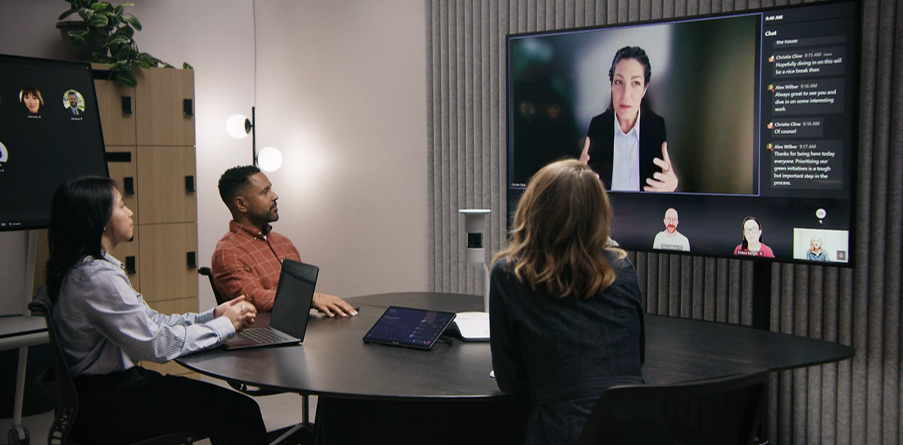
Most companies do not have a meeting room shortage. They have a meeting room visibility and management problem. Rooms remain booked but empty, employees lose time searching for available space, and administrators resolve conflicts that should have been prevented by the system.
A good meeting room booking system fixes the scheduling layer. The best system for your organization also fits the way employees already work, gives administrators the right controls, connects bookings to the physical room, and produces information that helps facilities teams make better decisions.
This guide explains when a dedicated system is worth considering, the capabilities that matter most, the questions to ask vendors, and how an integrated platform such as ESI-TIK extends room booking into a smarter workplace experience.
When Is a Shared Calendar Enough?
A shared calendar may be sufficient for a small office with only a few meeting rooms, low booking contention and no requirement for approval workflows, check-in, room panels or detailed utilization reporting. If people can already find space easily and conflicts are rare, adding another platform may create more administration than value.
A dedicated meeting room booking system becomes more useful when an organization manages multiple floors or offices, experiences recurring no-shows, restricts access to premium rooms, needs delegated booking, or wants one consistent experience across calendars, web interfaces and room panels.
Seven Things to Look for in a Meeting Room Booking System
1. Calendar Integration That Fits Your Environment
Calendar integration is usually the most important adoption requirement. Employees should not need to maintain a room booking in one system and a meeting invitation in another. Confirm that the platform supports bidirectional synchronization with your organization’s configured calendar environment, such as Microsoft Exchange or Microsoft 365, or Google Calendar.
Treat calendar synchronization and online-meeting integration as related but separate requirements. Teams, Zoom and Webex can support the meeting experience, while Exchange, Microsoft 365 or Google Calendar manage the organization’s calendar resources. Ask vendors to explain exactly which platform is authoritative and how changes and cancellations are propagated.
2. Booking Channels Employees Will Actually Use
Adoption is the hidden success factor. A system that nobody uses produces incomplete data and leaves shadow booking habits in place. Choose the channels that match how your employees already work rather than selecting features that will remain unused.
|
Channel |
Best suited to |
What to confirm |
|---|---|---|
|
Web and mobile-friendly interface |
Planned bookings and floor-plan browsing |
Secure sign-in, live availability and a simple booking flow |
|
Calendar integration |
Employees who work primarily in Outlook or Google Calendar |
Bidirectional synchronization and clear conflict handling |
|
Messaging or AI assistant |
Fast natural-language requests |
Supported languages, identity controls and the requests the assistant can complete |
|
Booking panels |
Walk-up booking and check-in at the room |
At-a-glance room status, ad-hoc booking and device management |
|
Voice or room devices |
Hands-free or in-room workflows |
Supported hardware and whether the capability is standard or optional |
3. Governance Without Unnecessary Administration
Meeting rooms are not all interchangeable. A boardroom may require approval, a training room may allow long recurring sessions, and some rooms may be reserved for particular teams. The system should enforce these differences without forcing administrators to review every ordinary booking.
- Approval workflows for high-demand or restricted rooms
- Roles and permissions for administrators, assistants and general employees
- Delegated or on-behalf booking
- Usage policies, booking limits, quotas and buffer times
- Recurring and custom-series booking
- Batch booking and reservation import for training or event schedules
4. Check-in and No-show Management
Ghost meetings reduce real availability even when the calendar appears full. Look for configurable check-in methods, clear attendance status, early checkout and automatic no-show cancellation. A useful system should return an unused room to the schedule without creating confusion for the organizer or the next person who wants to book it.
5. A Clear Connection to the Physical Room
The employee experience does not end when a calendar invitation is sent. Interactive floor plans, filters for capacity and equipment, wayfinding and booking panels help people find the right room and understand its status. For larger offices, these features can be as important as the reservation form itself.
Check whether room panels support the actions your workplace needs, such as ad-hoc reservations, check-in, extension, early release or QR and card-based workflows. Also confirm how panels are monitored and managed across multiple locations.
6. Analytics That Support Workplace Decisions
Once bookings, check-ins and connected workplace signals are managed through one platform, reporting becomes more useful. Look for dashboards covering booking volume, usage rates, check-in percentages, no-show rates and early release patterns by room, floor or building.
Over time, these reports can help facilities teams identify underused rooms, evaluate demand for smaller collaboration spaces, improve portfolio planning and connect workplace activity to wider energy and ESG initiatives. The most useful system makes data understandable to the people who must act on it, not only available to technical administrators.
7. Enterprise Readiness and Total Cost
Feature lists rarely show the full effort required to operate a system. Before shortlisting, evaluate authentication, role-based access, audit history, language support, data retention, deployment options, implementation services and ongoing support.
Pricing may include software licenses, room panels, mounting, sensors, gateways, AV integration, implementation, training and support. Compare the total deployment rather than a headline per-room subscription. A lower-cost tool may be appropriate for basic scheduling, while an integrated platform may provide more value where automation, hardware management and multi-location operations are required.
From Room Booking to a Smart Meeting Room
Booking software, AV control and IoT monitoring were traditionally purchased as separate systems. In a smart meeting room, supported integrations allow them to work together. A reservation can prepare the room for the meeting, while centralized monitoring gives facilities teams visibility across rooms and devices.
- Lighting, displays, curtains, air-conditioning and AV equipment can be prepared for the meeting.
- Occupancy and environmental sensors can support room-use and comfort workflows.
- Centralized monitoring can flag an offline panel or device before employees enter the room.
- Personal profiles can restore preferred room settings for the meeting organizer.
These capabilities depend on the selected system design and integrations. Learn more about ESI Asia’s AV-over-IP room automation and centralized IoT management solutions.
Ten Questions to Ask Before You Shortlist a Vendor
- Which calendar platform does the system synchronize with in our proposed deployment?
- Which booking channels are included, and which require additional modules or hardware?
- Can room policies, approvals and permissions vary by room, location or user group?
- Can assistants book on behalf of executives, with a clear record of who created the booking?
- How are recurring schedules, custom series and bulk reservations managed?
- Which check-in methods and no-show controls are supported?
- Can employees search by capacity, equipment, floor or location and book from a floor plan?
- What dashboards, reports and exports are available to facilities and management teams?
- What identity, security, audit and deployment options are available?
- What is included in the total cost: software, panels, sensors, integration, implementation and support?
How ESI-TIK Maps to This Evaluation Framework
ESI-TIK is a Hong Kong-developed workplace and facilities management platform that combines room-booking capabilities with optional workplace, AV and IoT modules. Its booking capabilities include live availability, approval workflows, delegated booking, batch scheduling, interactive floor plans, check-in and no-show release, booking panels and utilization reporting.
Depending on the selected deployment and integrations, ESI-TIK can connect with the organization’s configured calendar platform and extend into WhatsApp, online-meeting, room-automation and IoT workflows. The result is a path from basic room scheduling to a connected workplace in which bookings, rooms and central management work together.
Buyers should confirm which software modules, hardware and data sources are included in their proposed deployment. This makes it easier to compare like with like and design a solution around actual workplace requirements rather than a generic feature list.
Explore the ESI-TIK Room Booking System, review the wider Workplace and Facilities Management platform, or arrange a live demonstration at the ESI Experience Centre in Kwun Tong.
Frequently Asked Questions
What is the difference between a room booking system and a shared calendar?
A shared calendar records reservations and may support basic resource policies. A dedicated room booking system adds a purpose-built discovery experience, approval workflows, delegated booking, check-in, no-show management, floor plans, panels and workplace reporting.
How do booking systems reduce room hogging?
They can combine usage policies, approval requirements, booking limits, check-in and no-show auto-cancellation. If nobody checks in within the configured window, the room can be returned to the schedule.
Do meeting room booking systems work with Microsoft Teams and Outlook?
Leading platforms support Microsoft-focused environments through Exchange or Microsoft 365 calendar integration and may also support Teams meeting workflows. Confirm the precise synchronization model, configured provider and included online-meeting integrations with each vendor.
What does a smart meeting room automate?
Depending on the installed integrations, a smart meeting room may control lighting, displays, curtains, air-conditioning and AV equipment, monitor room devices, and restore organizer preferences.
How much does an enterprise meeting room booking system cost?
Cost depends on room count, software modules, deployment model, panels, sensors, AV or IoT integration, implementation and support. Compare the total deployment cost and the business outcome rather than relying only on a headline subscription price.
Can one system manage rooms across multiple offices?
Yes. Enterprise platforms can support multiple buildings, floors and office locations, with centralized administration and reporting by location. Confirm whether multi-location management is included in the proposed package.
Choose for the Workplace You Actually Operate
The best meeting room booking system is not the one with the longest feature list. It is the one employees will use, administrators can govern, facilities teams can learn from, and the organization can support over time. Start with your calendar environment, booking behavior and operational problems. Then decide how far the solution should extend into panels, analytics, automation and IoT.
Ready to see it live? Contact ESI Asia to arrange a demonstration.